
Fitting Personal Training Around a Busy Work Week
The most common reason people on the Northern Beaches put off training isn’t motivation or cost. It’s time.
On paper, semi-private training and group fitness classes look similar. Both involve training alongside other people, both cost less than one-on-one coaching, and both run at set times.
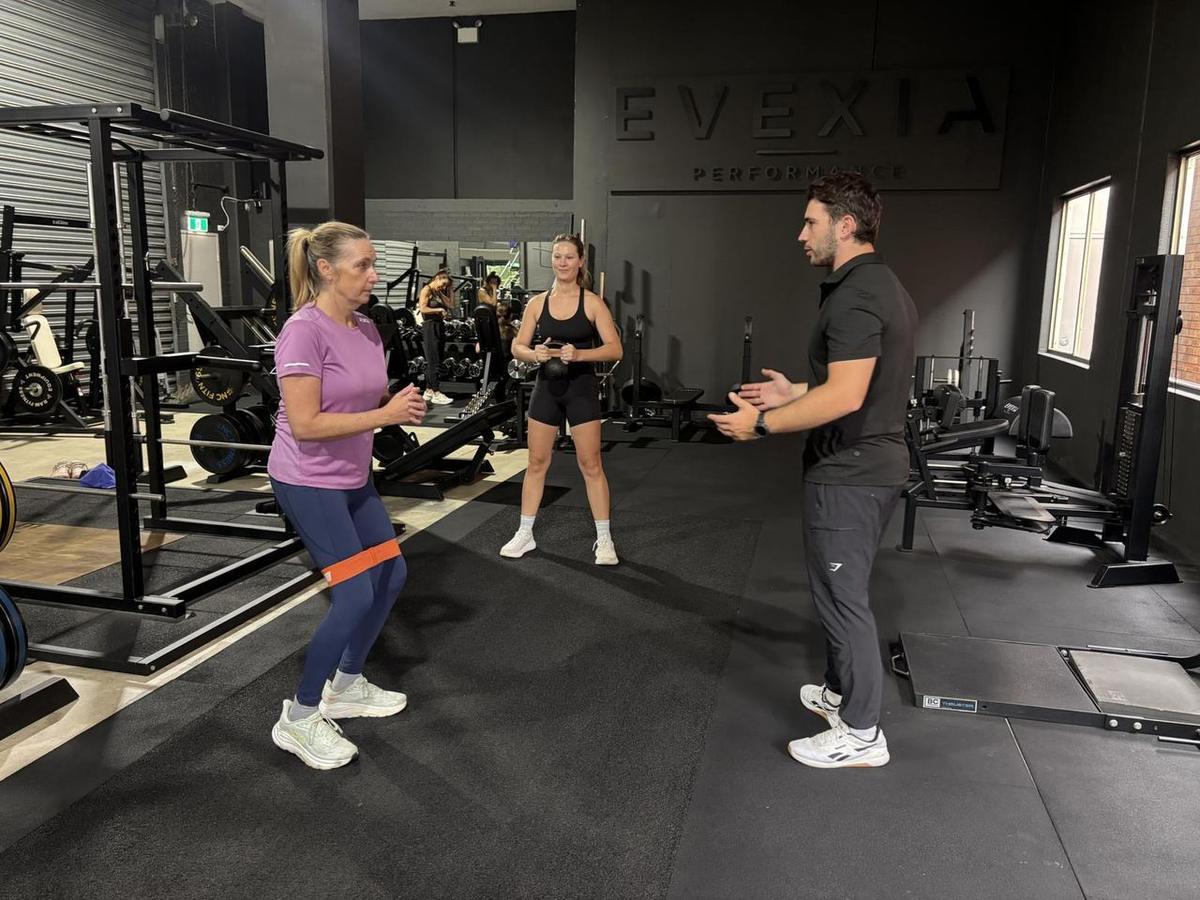
On paper, semi-private training and group fitness classes look similar. Both involve training alongside other people, both cost less than one-on-one coaching, and both run at set times. That surface similarity causes a lot of confusion, and it’s one of the most common questions people ask when they’re weighing up where to train on the Northern Beaches. In practice, the two formats are built for completely different purposes, and choosing the wrong one for your goal is an expensive way to find out.
A group fitness class is a single workout delivered to a room full of people. Whether it’s ten people or thirty, everyone does the same session, at the same pace, with the same exercises. The instructor’s job is to run the class, keep the energy up, and keep people moving. What the instructor can’t do, no matter how skilled they are, is watch your squat while also watching twenty-nine other people’s squats. The format doesn’t allow for it. You’re following along, and you’re mostly responsible for your own technique.
Semi-private training is a fundamentally different structure. At Solve, a semi-private session has a maximum of three people, and each person follows their own individual program. You’re not doing the same workout as the person next to you. You’re doing the program your coach built for you, based on your assessment, your goals, and your history. The coach moves between the three of you, correcting technique, adjusting loads, and progressing each person’s plan separately. You share the coach’s time, which is what keeps the cost down, but you don’t share the program.
That distinction matters more than it sounds. If you have a shoulder that doesn’t love overhead pressing, a group class will still program overhead pressing because the class is built for the room, not for you. In a semi-private session, your program simply doesn’t include it, or it includes a version that works for your shoulder. If you’re a desk worker with a postural pattern that needs specific attention, a class can’t account for that. A coach running a semi-private session can, because they’ve assessed you and built around it.
Group classes genuinely excel at one thing: energy and atmosphere. There’s a real motivational effect from training in a room full of people with music going and an instructor driving the pace. For people who find it hard to push themselves alone and who just want to move, sweat, and feel good, classes deliver that reliably. They’re also social, which keeps some people coming back when nothing else would. None of that should be dismissed.
Where classes fall short is progression. A good program changes over time: the weights go up, the exercises evolve, the volume shifts as you adapt. Classes are generally designed to be repeatable for anyone who walks in, which means the difficulty stays roughly constant and your body stops adapting after the first couple of months. Many people hit a plateau in classes and assume they need to work harder, when really they need a program that progresses. This is the same reason a gym membership alone often isn’t enough to get results.
Semi-private training is built for progression. Your coach tracks what you lifted last week and plans what you’ll lift this week. Technique is corrected in real time, which means you build proper movement patterns from the start rather than reinforcing faults for months. The result is that people in semi-private sessions tend to keep improving long after class-goers have stalled, whether the goal is strength, fat loss, or building muscle.
Cost is where people often get confused, because classes are usually cheaper per session. But the comparison isn’t really like for like. A class gives you a workout. A semi-private session gives you a program, coaching, and progression. When you factor in how many class sessions it takes to achieve a result versus how many coached sessions, semi-private often works out as better value over six to twelve months. Our pricing page lays out the semi-private rates clearly so you can do the comparison for yourself.
Safety is another practical difference. In a class, the instructor can’t see everyone, and it’s common for people to pick up small technique faults that turn into niggles over time. In a semi-private session with three people, every rep is visible to the coach. For anyone training in their 40s and beyond, or coming back from a layoff, that level of supervision is the difference between training confidently and training nervously.
So which one suits you? If you want to move, enjoy the buzz of a room, and you’re not chasing a specific outcome, classes are a perfectly good option. If you have a goal, a timeline, a body with a history, or you’ve already tried classes and stalled, semi-private training is the format built for that. And if you want the full attention of a coach for the entire session, one-on-one training sits a step further along the same line.
The easiest way to work out which format fits is to come and see how a semi-private session actually runs. Book a free consultation at our Brookvale studio and we’ll talk through your goals, show you the format, and give you an honest read on whether semi-private is the right fit or whether something else would serve you better. Read what semi-private clients say if you want to hear it from people who’ve made the switch.
A free 45-minute consultation covers your history, your goals and a movement assessment — then a plan you can actually follow.

Bachelor of Science with Dean’s Award for Academic Excellence and a nationally recognised Nutritionist specialising in sustainable fat loss and body composition. Writes every program and leads the coaching at Evexia Wellbeing, Brookvale. More about Max →
Keep reading
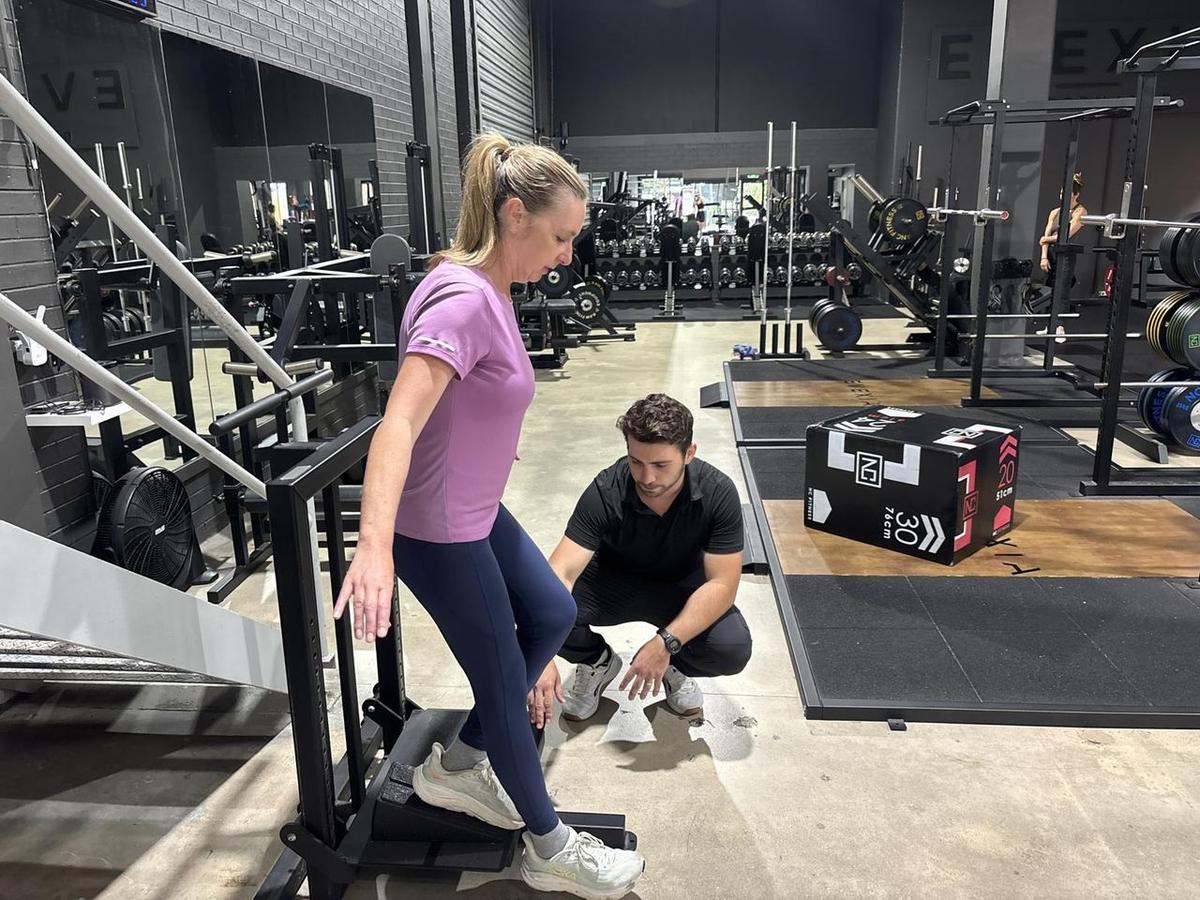
The most common reason people on the Northern Beaches put off training isn’t motivation or cost. It’s time.
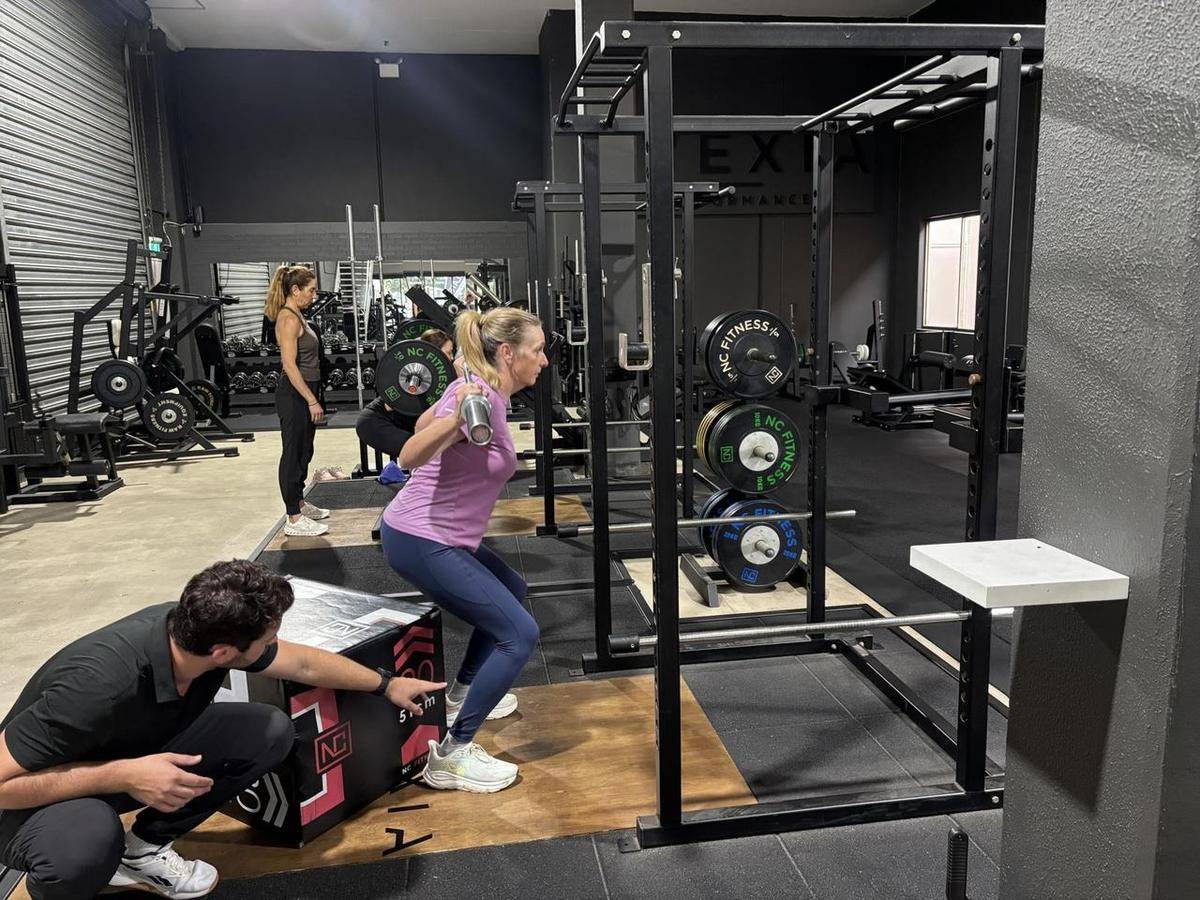
One of the first questions people ask after a consultation is how many sessions a week they actually need. It’s a fair question, because the answer shapes your schedule, your budget, and how quickly you’ll see results.
Free 45-minute consultation
A free 45-minute consultation covers your training history, your goals and a movement assessment — with no obligation to continue.
Evexia Wellbeing, Unit 1/27 Dale St, Brookvale NSW 2100 · Parking on site