
Muscle Mass After 40: Why It’s the One Thing Worth Protecting
Muscle isn’t about looking a certain way. It’s the tissue that decides how you function at 70, and it starts leaving quietly from your 30s unless you give it a reason to stay.
One gets you a coach’s undivided attention. The other gets you three times as many coached sessions for the same money. For most people, the second one produces better results — and here’s why.
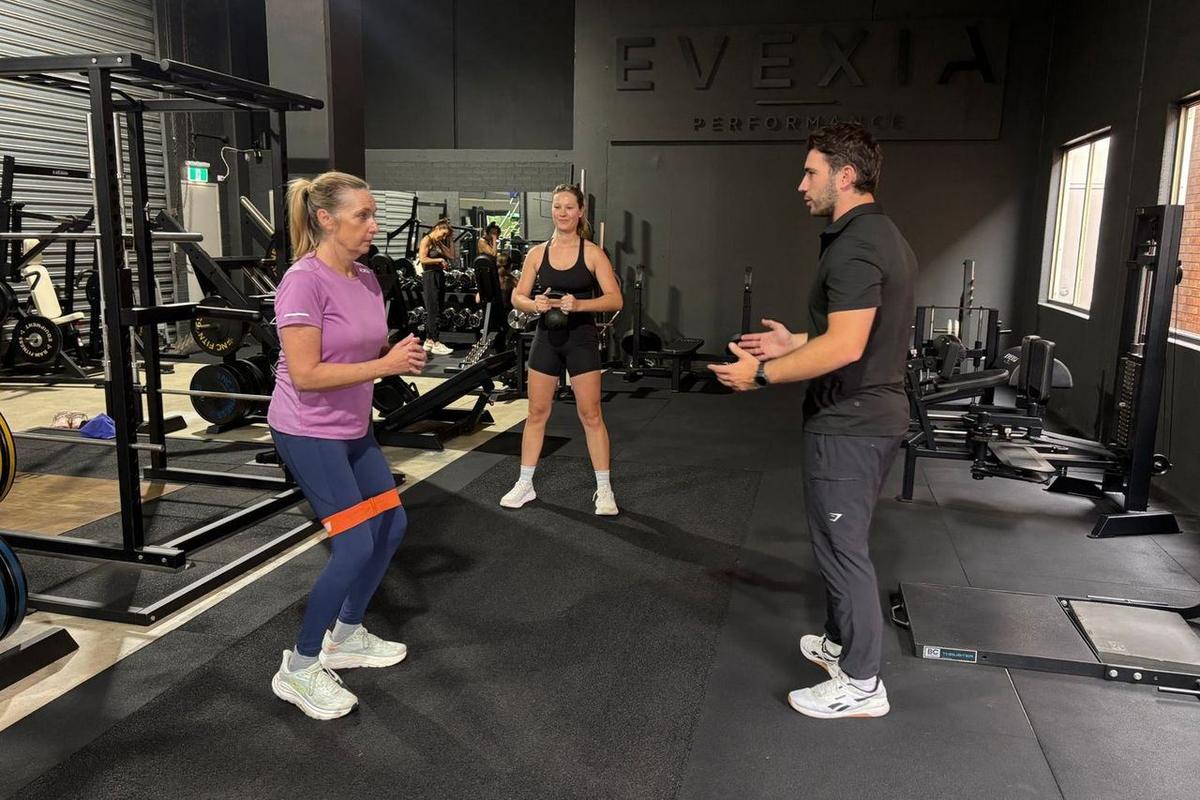
Most people comparing these two formats assume it’s a straight quality-versus-price trade-off: pay more, get better coaching. That’s not quite what’s happening, and the difference matters when you’re deciding where your money goes.
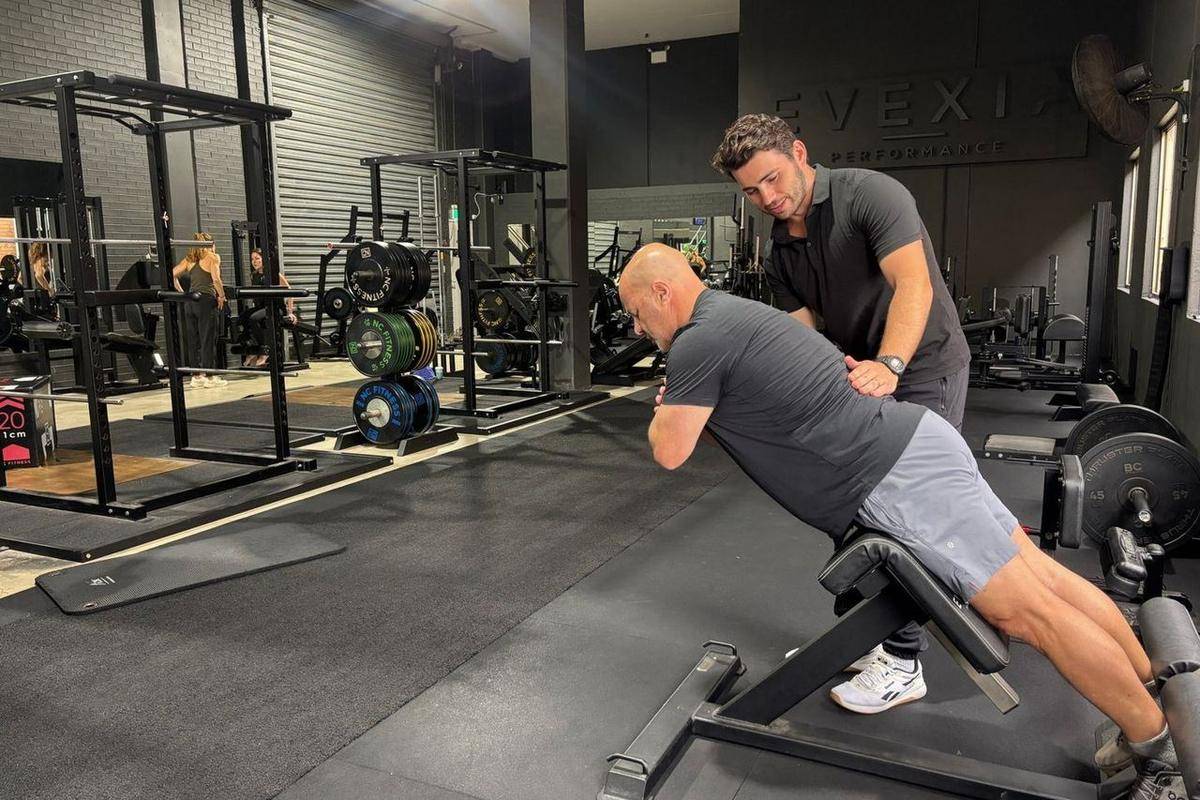
1-on-1 personal training is one coach, one client, for the whole session. Their attention doesn’t move. Every set is watched, every cue is for you, and the session can change direction entirely in the moment if something isn’t working.
Semi-private training — done properly — is one coach with two or three clients, each running their own individual program. It is not a small class. Nobody is following along with anyone else. Your exercises, your loads and your progressions come from your own assessment, and the coach moves between people, correcting technique across almost every set.
That distinction is the whole thing. A “small group training” session where six people do the same circuit is a class with a nicer name, and it has none of the properties described here. The cap is what makes the format work; ours is three per coach and never more.
National benchmarks put one-on-one personal training at roughly $70–$130 a session.1,2 On the Northern Beaches, where rates run above the national average, $120–$150 is closer to what you’ll actually be quoted. Semi-private generally sits between $50 and $70.
Where it gets interesting is when you stop comparing per-session prices and start comparing what a week actually looks like at a given budget.
| Same weekly spend, ~$180 | What you get |
|---|---|
| Gym membership + 1 × PT session | 1 coached session, 6 days on your own |
| 3 × semi-private at Solve | 3 coached sessions, own program each time, progress tracked, no membership |
The second row isn’t better because the coaching is better in any single session. It’s better because training frequency is where results compound, and the first row leaves you improvising for six days out of seven.
For someone who trains confidently and consistently on their own, one expert session a week to check programming is a perfectly sensible model. For someone who isn’t going to the gym independently — which is most people who go looking for a trainer — it’s paying personal training prices to train once a week.
The free 45-minute consult exists to answer exactly this. We’ll tell you what we think — including if we think semi-private is the better fit.
There are situations where undivided attention isn’t a luxury, and we’ll say so:
What those have in common is that the complexity is genuinely high. Wanting to get stronger, move better and hold onto muscle as you age — which describes most people — isn’t on that list.
There’s a benefit to the shared format that’s easy to miss on a pricing page.
When two other people are booked into your slot, the friction around skipping goes up. Cancelling on a coach is easy enough. Cancelling on a room you’ve committed to, repeatedly, is harder. Consistency is less a personality trait than a support system — and the format quietly supplies one.
There’s also the energy of training near other people who are working, without the noise of a class or a coach who doesn’t know your name. Everyone’s on a different program, so nobody’s competing. You’re measuring yourself against your own last week.
“Semi-private” isn’t a protected term, and it covers everything from what’s described here to a circuit class with eight people in it. Before you commit anywhere:
If your goals sit around strength, body composition, mobility, bone density or general longevity — and you don’t have movement restrictions needing full-session attention — semi-private will almost certainly get you further, because it makes three coached sessions a week affordable rather than aspirational.
If you’re working through something complex, or you have a hard deadline, 1-on-1 earns its price for that period. Plenty of our clients do exactly that and move across once the foundation is built.
Semi-private from $90 a week — $60 a session when you train three times a week — at our private gym in Brookvale. Free parking, no membership.
Bachelor of Science with Dean’s Award for Academic Excellence and a nationally recognised Nutritionist specialising in sustainable fat loss and body composition. Writes every program and leads the coaching at Evexia Wellbeing, Brookvale. More about Max →
Related questions
For most goals, yes — with the caveat that the group has to be genuinely small and everyone has to be on their own program. At three per coach your technique is still watched on almost every set. Where 1-on-1 wins is complex rehabilitation and significant movement restrictions that need uninterrupted attention.
Semi-private generally runs $50–$70 per person on the Northern Beaches, against $120–$150 for one-on-one. At Solve in Brookvale it’s billed weekly by frequency — $90 for one session a week, $135 for two, $180 for three, which works out at $60 a session at three times a week. Facility access is included, so there’s no separate gym membership. 1-on-1 is $165 per 45-minute session.
In a class, everyone does the same workout. In a semi-private session, every person follows their own program built from their own assessment. Same room, different training. If a studio can’t answer this question clearly, it’s a class.
Keep reading
Muscle isn’t about looking a certain way. It’s the tissue that decides how you function at 70, and it starts leaving quietly from your 30s unless you give it a reason to stay.
Protein is the single most important variable in a fat loss diet — not because it burns fat, but because it decides whether the weight you lose comes off as fat or as muscle.
Free 45-minute consultation
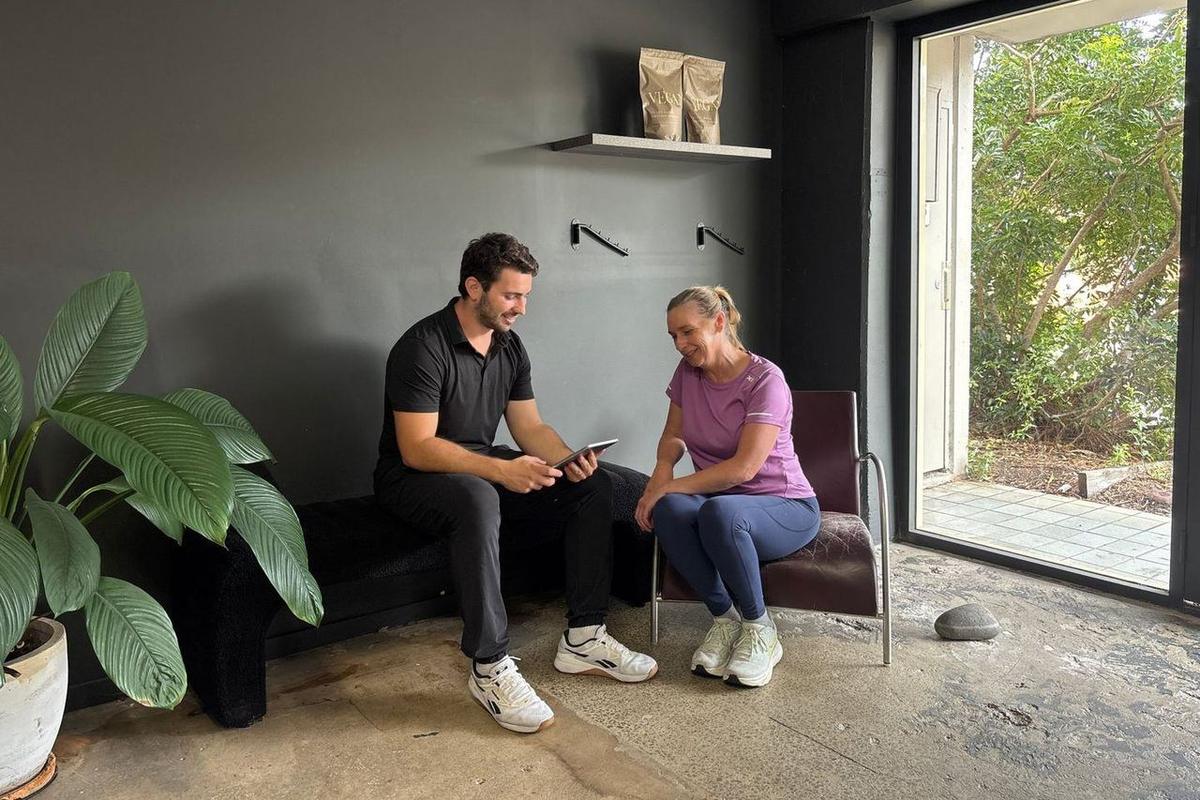
A free 45-minute consultation covers your training history, your goals and a movement assessment — with no obligation to continue.
Evexia Wellbeing, Unit 1/27 Dale St, Brookvale NSW 2100 · Parking on site