
How Much Protein Do You Actually Need to Lose Fat?
Protein is the single most important variable in a fat loss diet — not because it burns fat, but because it decides whether the weight you lose comes off as fat or as muscle.
Muscle isn’t about looking a certain way. It’s the tissue that decides how you function at 70, and it starts leaving quietly from your 30s unless you give it a reason to stay.
Most people in their forties don’t think about muscle. They think about weight. The scale is the number that gets watched, and as long as it isn’t climbing, everything feels roughly under control.
The problem is that the scale can’t tell you what you’re made of. Two people at the same weight, same height, same age can have completely different amounts of lean tissue — and completely different odds of being independent at eighty. Body weight is the least informative number in the room.
Age-related muscle loss — clinically, sarcopenia — starts far earlier than most people expect. Research puts the decline at roughly 3–8% of muscle mass per decade after age 30, with the rate accelerating after 60.1
It’s quiet. Nobody wakes up at 45 and notices 6% less muscle. What they notice is that the stairs feel longer, that a heavy suitcase is a two-hand job now, that getting off the floor involves a plan. Those aren’t separate problems. They’re the same problem, showing up late.
And because muscle is metabolically expensive tissue, losing it quietly lowers the amount of energy you burn at rest. Which is why people often find weight creeping up in their forties despite eating roughly what they always have. The maths changed underneath them.
The strongest case for training after 40 isn’t aesthetic. It’s that skeletal muscle does several jobs that only become obvious once it’s gone.
Skeletal muscle is the largest site of glucose disposal in the body. More lean tissue means more capacity to handle carbohydrate without it sitting in the bloodstream. Less muscle means the same meal lands harder.
Bone responds to being loaded, and the main thing that loads it is muscle pulling on it. Progressive resistance training is one of the few interventions shown to slow — and in some cases reverse — age-related bone mineral density loss, which matters most around and after menopause when decline accelerates sharply.2,3
Catching yourself when you trip is a power quality — the ability to produce force quickly. Power declines faster with age than strength does. A fall at 75 that ends in a fractured hip is very often the beginning of a much worse story, and the ability to avoid it was built decades earlier.
This is what we mean when we talk about longevity training rather than fitness. The goal isn’t a number on a lift. It’s that you’re still carrying your own shopping, playing with grandchildren on the floor, and getting up from it unassisted, thirty years from now.
The free consultation includes a functional movement assessment — you leave knowing where you stand, whether or not you train with us.
Walking is genuinely good for you. So is swimming, so is cycling. They do real things for cardiovascular and metabolic health, and most people should do more of them.
But none of them meaningfully protects muscle. They aren’t progressive — you can walk the same 5km for twenty years and the stimulus never increases — and they don’t load tissue heavily enough to signal that it’s worth keeping. Someone who walks daily and does nothing else will still lose muscle on schedule.
Australia’s physical activity guidelines separate the two for exactly this reason: 2.5–5 hours of moderate activity per week, plus muscle-strengthening activities on at least two days.4 The second half is the part that gets skipped. Only around 4 in 10 Australian adults aged 18–64 meet it.5
That gap is usually not about motivation. It’s about not knowing what to do once you’re in front of a rack, and not wanting to find out in front of an audience.
The good news is that muscle responds at any age. Studies in adults well into their seventies and eighties show meaningful gains in strength and lean mass from progressive resistance training. The tissue hasn’t stopped listening — it just stopped being asked.
| What matters | In practice |
|---|---|
| Progressive overload | The load, reps or difficulty goes up over time. Doing the same workout forever stops working. |
| Frequency | 2–3 sessions a week. Two is the floor that works; three is where things compound. |
| Compound movements | Squat, hinge, push, pull, carry. More muscle per minute than isolation work. |
| Enough protein | Training without adequate protein is a wasted stimulus. More on how much → |
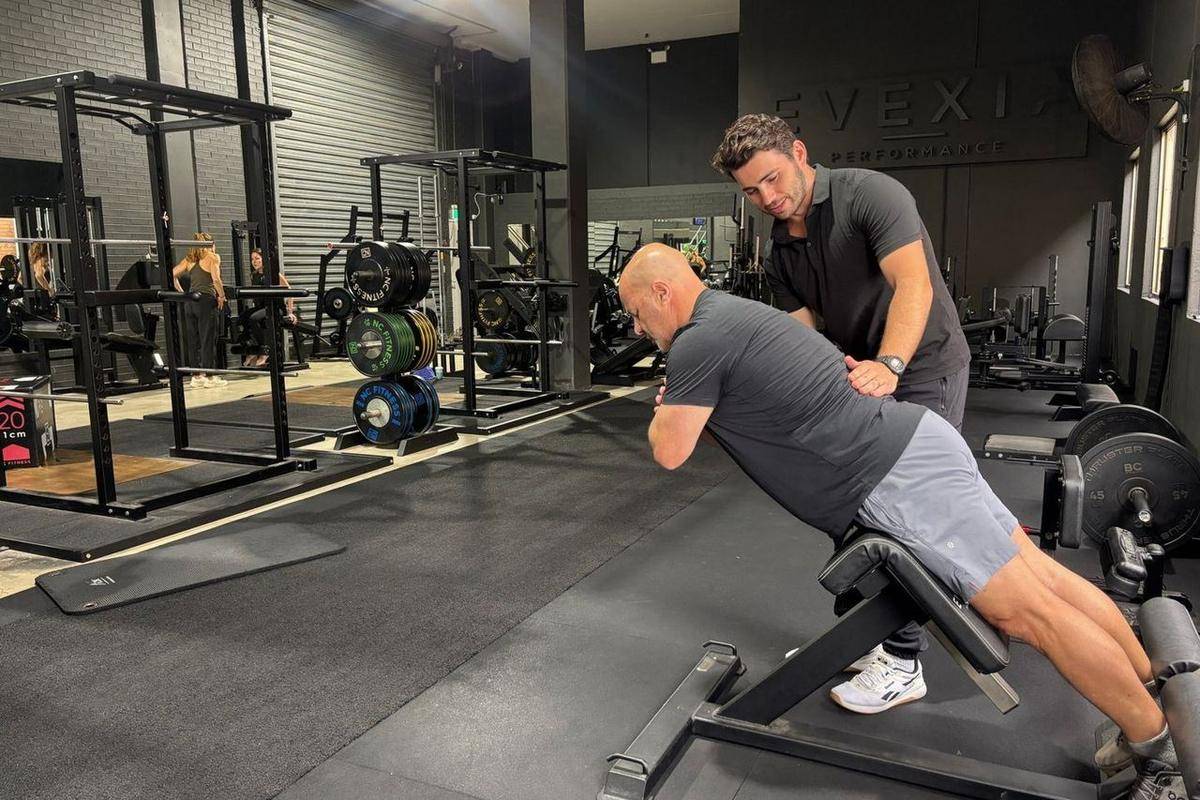
| Technique that holds up | Load applied to a poor pattern accelerates the problem it was meant to solve. |
That last one is the reason we cap our semi-private sessions at three people per coach. Progressive loading only works if someone is watching the movement it’s being applied to. Past three, that stops being true, and you’re just a person lifting weights near a trainer.
The most common thing we hear at a first consultation is some version of “I’ve left it too long.”
You haven’t. What changes with age isn’t whether training works — it’s how much precision it requires. Joint load has to be managed rather than ignored. Structural imbalances that were invisible at 25 need addressing before they’re loaded. Recovery takes longer, so programming has to account for it rather than assume you’ll bounce back.
None of that is a reason not to start. It’s a reason not to start alone, guessing, from a program written for someone else.
Every program at Solve is built from a movement assessment first. Semi-private training from $90 a week — $60 a session when you train three times a week — at our private gym in Brookvale.

Bachelor of Science with Dean’s Award for Academic Excellence and a nationally recognised Nutritionist specialising in sustainable fat loss and body composition. Writes every program and leads the coaching at Evexia Wellbeing, Brookvale. More about Max →
Related questions
Measurable decline begins around age 30, at roughly 3–8% of muscle mass per decade, and accelerates after 60. It’s gradual enough that most people don’t notice until a task that used to be easy isn’t.
Yes. Studies in adults into their seventies and eighties show meaningful gains in both strength and lean mass from progressive resistance training. Programming needs more care around joint load and recovery, but the tissue still responds.
No. Walking has real cardiovascular and metabolic benefits, but it isn’t progressive and doesn’t load muscle heavily enough to preserve it. Australia’s guidelines list muscle-strengthening activity on two days a week as a separate requirement for exactly this reason.
Keep reading

Protein is the single most important variable in a fat loss diet — not because it burns fat, but because it decides whether the weight you lose comes off as fat or as muscle.
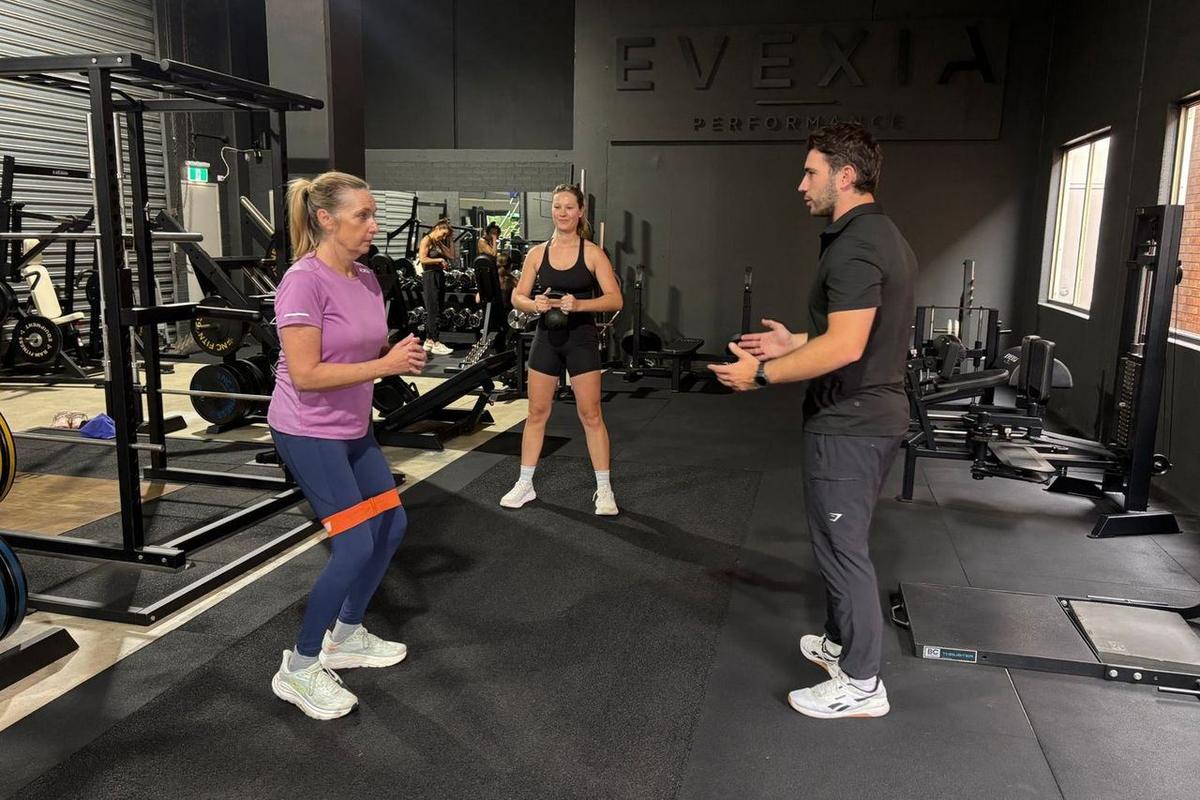
One gets you a coach’s undivided attention. The other gets you three times as many coached sessions for the same money. For most people, the second one produces better results — and here’s why.
Free 45-minute consultation
A free 45-minute consultation covers your training history, your goals and a movement assessment — with no obligation to continue.
Evexia Wellbeing, Unit 1/27 Dale St, Brookvale NSW 2100 · Parking on site