
Fitting Personal Training Around a Busy Work Week
The most common reason people on the Northern Beaches put off training isn’t motivation or cost. It’s time.
A gym membership gets you in the door and gives you equipment. It doesn’t give you a plan, and it doesn’t hold you accountable on a cold morning when the couch looks far more appealing than the squat rack.
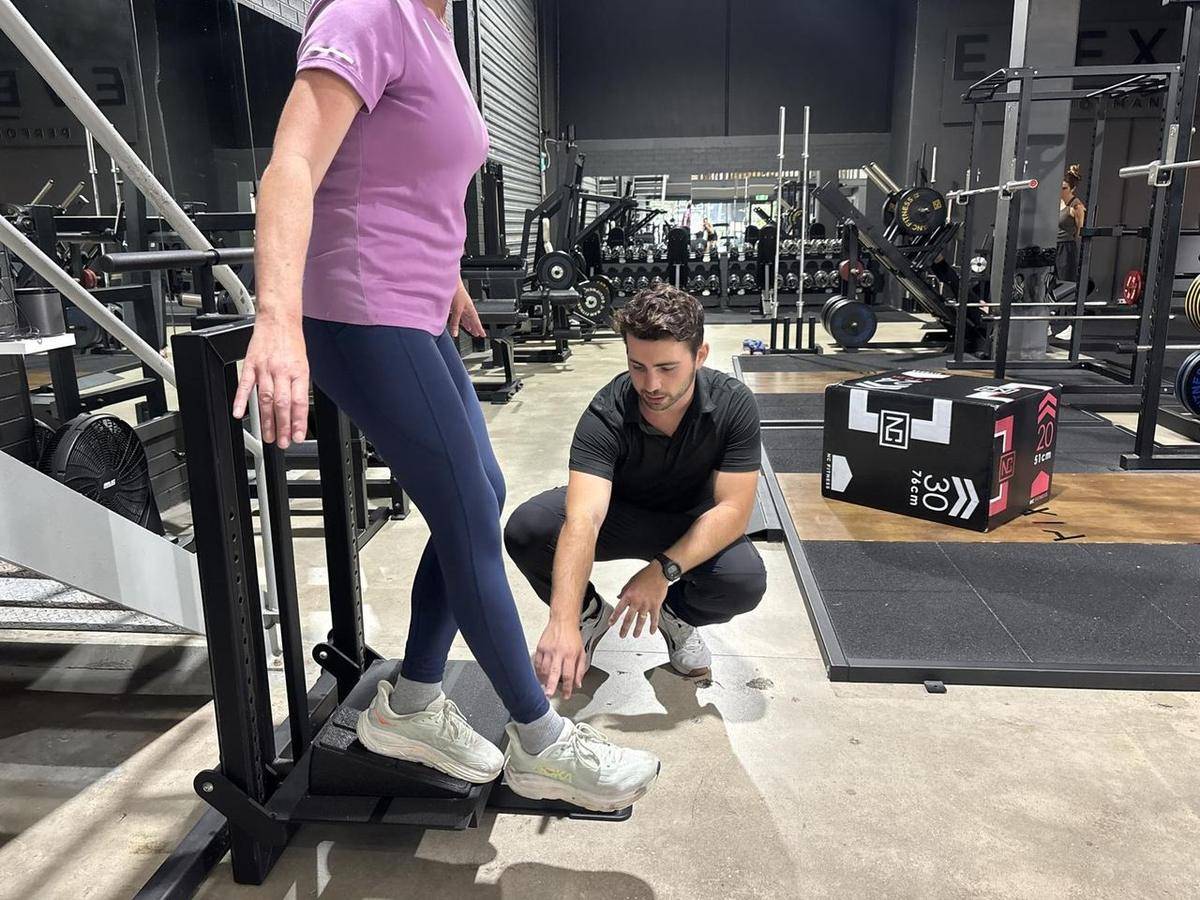
A gym membership gets you in the door and gives you equipment. It doesn’t give you a plan, and it doesn’t hold you accountable on a cold morning when the couch looks far more appealing than the squat rack. Plenty of people go consistently for a couple of months and still aren’t seeing much change. In the mirror, on the scale, or in how they feel day to day. That gap between effort and results is usually the real problem.
It’s worth understanding what a membership actually gives you versus what a coach adds. A membership is access, a facility, equipment, and the freedom to use them however you want. That’s genuinely valuable if you know what you’re doing and have the discipline to follow through. But it’s access without direction, and most people need direction.
A coach adds structure, progression, accountability, and real-time correction. A coach is also someone who knows what they’re doing and can build something specific to you rather than you guessing. Here are five signs it’s time to bridge that gap. Learn how semi-private coaching compares to 1-on-1.
This is the most common reason people first get in touch. Effort without a structured plan tends to plateau quickly. The body adapts to the same weights and the same routine within weeks. Week one to three, you’re making neurological adaptations and getting used to the stimulus. You’ll feel stronger even without much physical change. But by week four or five, if nothing’s changing about the program, the body stops adapting.
Real progress requires progressive overload, gradually and safely increasing the demand so the body keeps adapting. That might mean adding weight, adding reps, reducing rest periods, or changing the angle of the movement. Something has to change to keep driving adaptation. If results have stalled, the issue usually isn’t discipline or effort. It’s the absence of a plan that evolves. A coach builds that progression in automatically, adjusting based on what you’re actually capable of.
Avoiding certain exercises, or pushing through movements hoping the form is okay, leaves both results and safety on the table. Poor technique on compound lifts like squats, deadlifts, and presses is one of the fastest routes to a niggling injury. A slightly off squat feels fine for a few weeks, then your knee starts bothering you. A deadlift with a rounded lower back doesn’t hurt immediately, but it will. A bench press with shoulders shrugged up into your ears doesn’t work the muscles it’s supposed to, and it loads your shoulders in a way that adds up to injury over time.
A coach watching every rep can correct small faults before they become bigger problems, and can regress or progress a movement to suit the person doing it. That real-time correction is something you simply cannot get from watching yourself in a mirror or a video. Most people can’t even see their own postural faults. Read about proper form and technique.
Motivation is unreliable. It’s high in January, thin by March. What actually carries people through is accountability. When someone’s expecting you at a set time, you tend to show up. And people generally work harder with a coach there than they do training alone. If your enthusiasm reliably fades a few weeks in, a trainer isn’t a luxury. It’s the mechanism that keeps things going long enough to see change. That consistency compounds into real progress over months.
Losing weight before an event, rebuilding strength after an injury, getting back to training safely in your 40s. These are goals with a timeline and not much margin for error. A generic program pulled from an app rarely accounts for your history, your schedule, or the body in front of it. A program built around a specific goal, and adjusted as progress comes in, tends to close that gap far faster and more reliably. Explore our goal-specific programs.
Training is only part of the equation. Nutrition, recovery, sleep, and stress all shape the result. If workouts alone haven’t been enough, the missing piece is usually treating health as a connected system rather than a series of separate gym sessions. A coach who understands these connections can help you address the whole picture, not just the training.
None of this means a gym membership is a bad investment. With a solid plan, good technique, and the discipline to follow through, a membership may be all that’s needed. But recognizing two or three of the signs above usually means the membership isn’t the problem. It’s what’s missing around it.
If this sounds familiar, check out our training approach to see how we can close that gap, or get a clear, honest read on whether coaching would actually change the outcome by booking a free consultation. See what semi-private training costs to understand your investment.
A free 45-minute consultation covers your history, your goals and a movement assessment — then a plan you can actually follow.

Bachelor of Science with Dean’s Award for Academic Excellence and a nationally recognised Nutritionist specialising in sustainable fat loss and body composition. Writes every program and leads the coaching at Evexia Wellbeing, Brookvale. More about Max →
Keep reading
The most common reason people on the Northern Beaches put off training isn’t motivation or cost. It’s time.
On paper, semi-private training and group fitness classes look similar. Both involve training alongside other people, both cost less than one-on-one coaching, and both run at set times.
Free 45-minute consultation
A free 45-minute consultation covers your training history, your goals and a movement assessment — with no obligation to continue.
Evexia Wellbeing, Unit 1/27 Dale St, Brookvale NSW 2100 · Parking on site