
Muscle Mass After 40: Why It’s the One Thing Worth Protecting
Muscle isn’t about looking a certain way. It’s the tissue that decides how you function at 70, and it starts leaving quietly from your 30s unless you give it a reason to stay.
Protein is the single most important variable in a fat loss diet — not because it burns fat, but because it decides whether the weight you lose comes off as fat or as muscle.

Ask ten people how to lose fat and you’ll get ten versions of the same answer: eat less, move more. Which is true, and almost entirely useless — because it says nothing about what you lose.
Lose 8kg and you might have lost 8kg of fat. Or 5kg of fat and 3kg of muscle. The scale reports both identically. The mirror, your strength, your energy and your metabolism a year from now report them very differently.
That’s the actual question worth asking, and protein is the biggest lever on the answer.
When you eat less than you burn, your body needs to make up the shortfall from somewhere. Fat is the intended source. Muscle is also on the table — it’s metabolically expensive tissue, and a body that senses scarcity has no particular reason to keep it.
Adequate protein changes that calculation. It supplies the amino acids to maintain existing muscle tissue, and combined with resistance training it sends the signal that the tissue is still needed. Take either away and the body starts spending muscle to fund the deficit.
Protein does two other useful things at the same time:
The research consensus for someone in a calorie deficit who is also doing resistance training sits at roughly 1.6 to 2.2 grams per kilogram of bodyweight per day.1 Higher intakes haven’t been shown to add much; lower intakes start costing you lean mass.
| Bodyweight | Daily protein target |
|---|---|
| 60 kg | 96–132 g |
| 70 kg | 112–154 g |
| 80 kg | 128–176 g |
| 90 kg | 144–198 g |
| 100 kg | 160–220 g |
Two practical notes. If you’re carrying a lot of body fat, calculating from a target or lean bodyweight rather than current weight gives a more sensible number — the upper end of that table can be unnecessarily high. And these are targets to average across a week, not a daily pass-fail test.
The honest reaction most people have on seeing those numbers is that they’re higher than expected. That’s the point. Most people eating “pretty healthily” land somewhere near half of it.
Nutrition coaching at Solve starts with a 60-minute assessment of your current intake, habits and training load — before anyone suggests changing anything.
The gap between knowing the number and hitting it is where most people stall. A few things that make it manageable:
Decide the protein first, build the rest of the plate around it. Most people’s meals are constructed the other way around, which is how you end up at 8pm needing 90 grams.
Breakfast is where most people’s protein intake collapses. Toast, cereal and fruit are fine foods that contribute almost nothing to the day’s target. Fixing breakfast alone often closes half the gap.
You don’t need a database. You need to know that a chicken breast is about 40g, a can of tuna about 25g, a scoop of whey about 25g, 200g of Greek yoghurt about 20g, three eggs about 18g. That’s enough to run the day in your head.
Track for long enough to calibrate, then stop. The research consistently shows people who track lose more fat and sustain it longer2 — but the mechanism is education, not surveillance. Once you know what your usual meals contain, the tracker has done its job.
Protein isn’t magic and it isn’t a licence. Three things worth being clear about:
Protein matters more, not less. Medications like Ozempic and Wegovy work largely by suppressing appetite, which makes the deficit easy to hold — and also makes it very easy to under-eat protein without noticing, because you’re simply not hungry.
That combination — a large deficit, low protein intake, no resistance training — is the fastest way to lose a lot of weight and end up with a worse body composition than you started with. If you’re using a GLP-1, hitting protein and lifting weights is what determines whether the weight coming off is fat.
A sustainable rate of fat loss is approximately 0.5–1% of bodyweight per week. Fast enough to see real progress; slow enough to preserve muscle and keep training quality up. Faster approaches exist, and they trade muscle retention, energy and adherence for a number that moves sooner.
Which brings it back to the beginning. The goal was never a smaller number on the scale. It was a better ratio of what’s underneath it.
Weight loss and nutrition coaching from $300/month, alongside semi-private training from $90 a week in Brookvale.

Bachelor of Science with Dean’s Award for Academic Excellence and a nationally recognised Nutritionist specialising in sustainable fat loss and body composition. Writes every program and leads the coaching at Evexia Wellbeing, Brookvale. More about Max →
Related questions
Roughly 1.6–2.2 grams per kilogram of bodyweight per day if you’re in a calorie deficit and doing resistance training. For an 80kg person that’s about 130–175g daily. If you’re carrying significant body fat, calculating from target weight gives a more realistic number.
No. Energy balance determines whether you lose weight. Protein determines whether that loss comes from fat or muscle. They’re different questions, and you need both answered.
No — track long enough to calibrate, then stop. The value is in learning what your regular meals actually contain. Most clients reach that point within a few months and manage without a tracker afterwards.
Keep reading
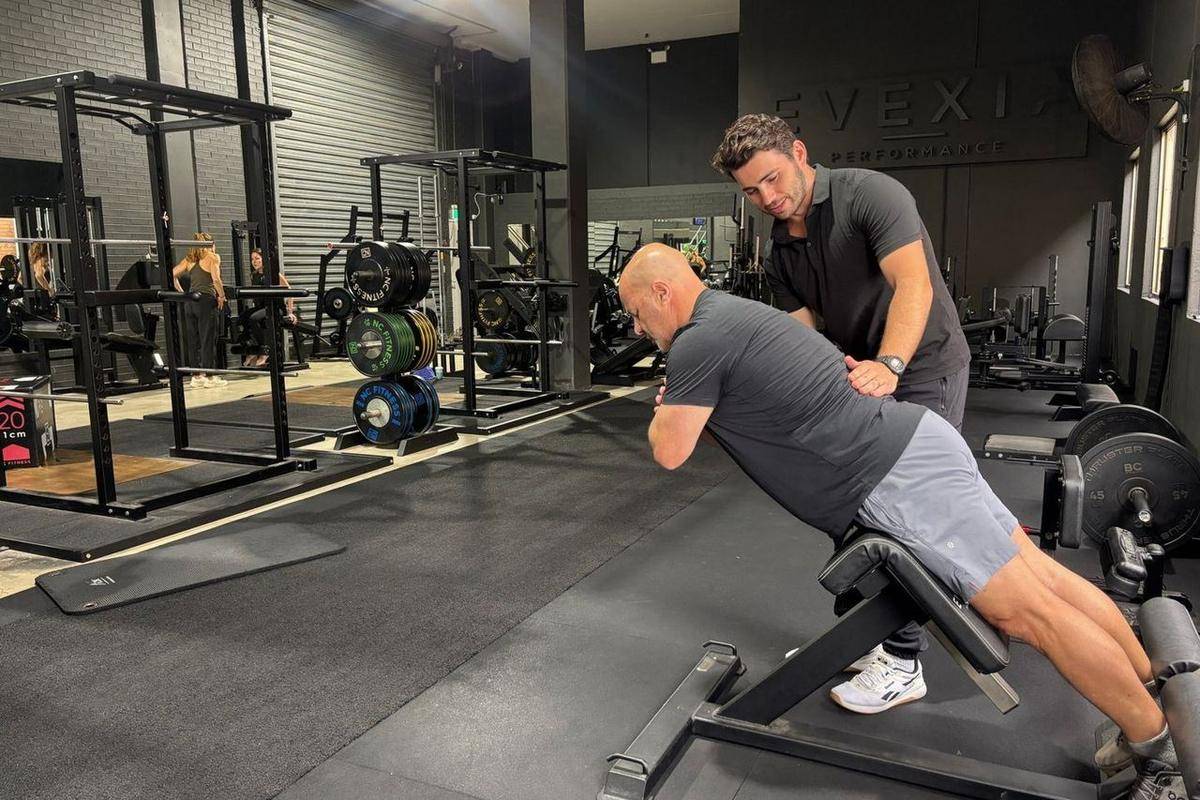
Muscle isn’t about looking a certain way. It’s the tissue that decides how you function at 70, and it starts leaving quietly from your 30s unless you give it a reason to stay.
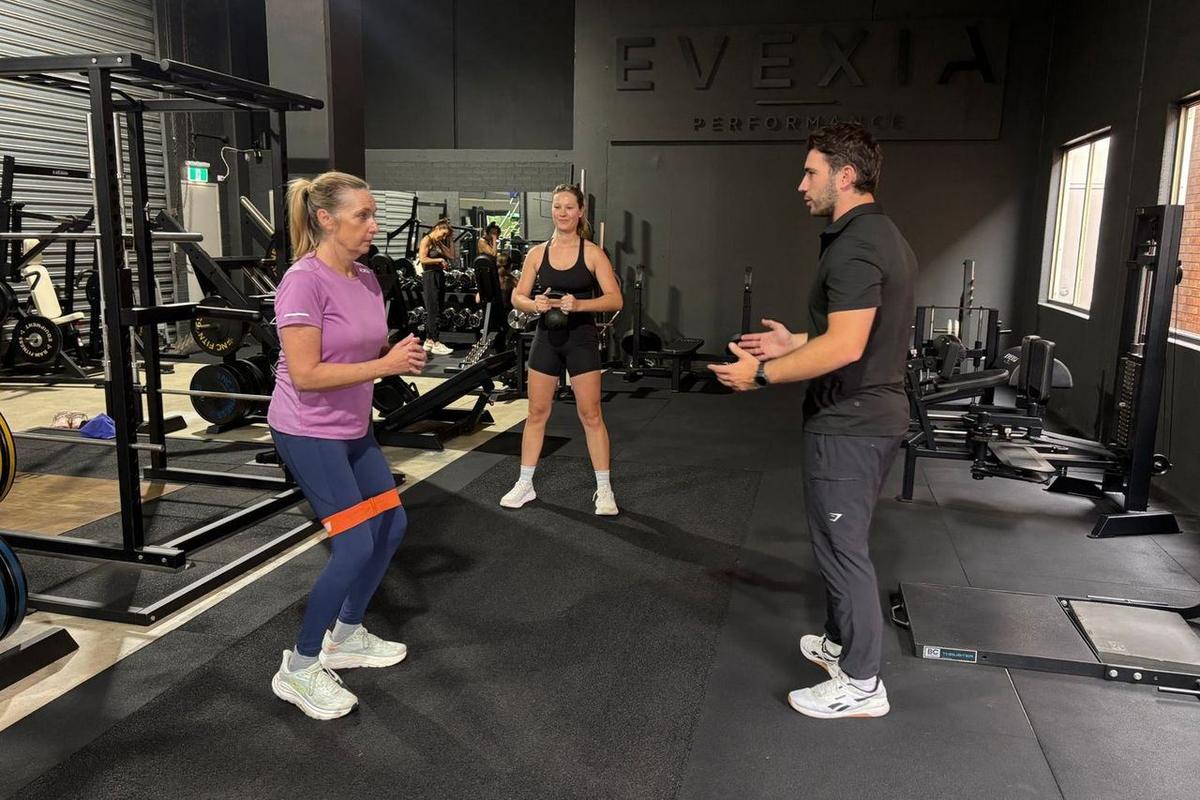
One gets you a coach’s undivided attention. The other gets you three times as many coached sessions for the same money. For most people, the second one produces better results — and here’s why.
Free 45-minute consultation
A free 45-minute consultation covers your training history, your goals and a movement assessment — with no obligation to continue.
Evexia Wellbeing, Unit 1/27 Dale St, Brookvale NSW 2100 · Parking on site